
Credit Report Versus Credit Score Explained

A lender can decline an application even when the number you see in a credit monitoring app looks reasonable. It can also approve someone with a less-than-perfect score because the underlying credit file shows stable income-related behavior, limited recent borrowing, and no unresolved reporting problems. That is why understanding credit report versus credit score matters. They are connected, but they are not interchangeable.
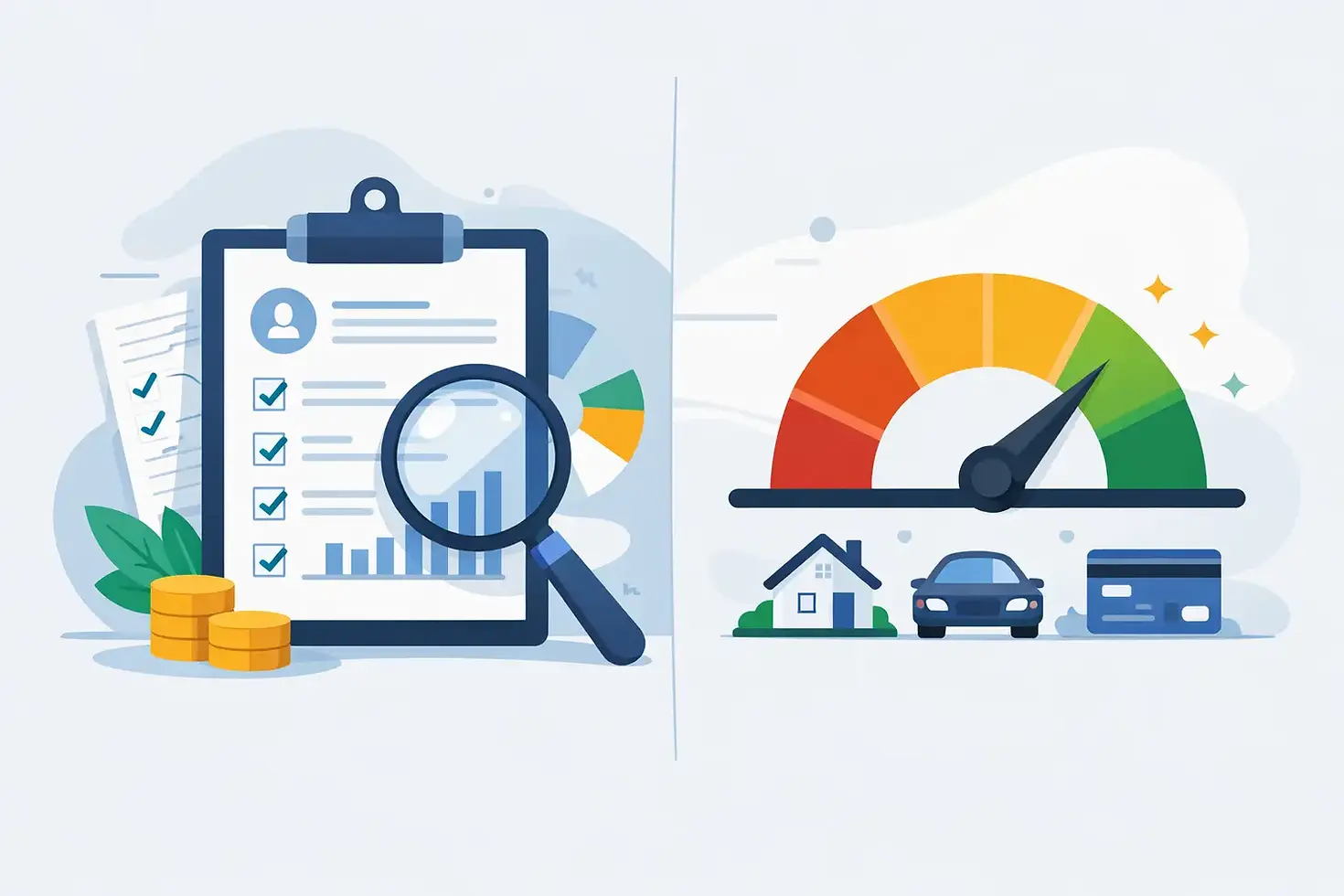
Your credit report is the detailed record. Your credit score is a numerical estimate created from information in that record. When you know how each one works, it becomes easier to spot errors, prepare for financing, and focus your credit-building efforts where they can make a real difference.
Credit Report Versus Credit Score: The Core Difference
A credit report is a file containing information reported about your borrowing and payment history. The three nationwide credit bureaus - Equifax, Experian, and TransUnion - may each maintain a separate version of your report. Their files can overlap, but they are not always identical.
Your report may include personal identifying information, current and past credit accounts, payment history, balances, credit limits, collections, public-record information where applicable, and inquiries made when you apply for credit. It may also show the company furnishing the information and the date each account was last updated.
A credit score is a number calculated from selected information in that report. Different scoring models use different formulas, and lenders may use a score designed for a particular type of lending, such as a mortgage or auto loan. Many commonly used scores range from 300 to 850, though not every score uses that range.
Think of the report as the evidence and the score as one interpretation of that evidence. The score can change as reported account information changes. The report tells you why.
What Lenders See When They Review Your File
A lender does not always make a decision based on one score alone. Depending on the loan, lender, and application, it may review your credit report, one or more scores, your income, employment information, debt obligations, down payment, and internal underwriting rules.
For example, a high credit card balance can increase your credit utilization and lower certain scores. But a lender may also see the actual balance, the account limit, the age of the account, and whether you have been making payments on time. A score is useful because it helps lenders assess risk efficiently. The full report provides more context.
This distinction is especially relevant when preparing for a major goal. A mortgage lender may pull reports and scores from multiple bureaus. An apartment manager may focus on recent collections, rental-related debts, or past-due accounts. An auto lender may use a score model that weighs auto-loan history differently than a general consumer score.
The score you receive through a bank or monitoring service can still be helpful for tracking trends. Just do not assume it is the exact score a lender will use. It may be based on a different bureau, a different date, or a different scoring model.
Why Your Credit Reports Can Be Different
It is common for Equifax, Experian, and TransUnion reports to contain different information. A creditor may report to one bureau, two bureaus, or all three. Reporting schedules can vary, and one bureau may update an account before another.
Differences are not automatically mistakes. However, they are a reason to review all three reports rather than relying on a single score or a single bureau file. An inaccurate late payment, an account that does not belong to you, a duplicate collection, or an incorrect balance can affect how you are evaluated.
Errors can be particularly frustrating because even a small reporting issue may have an outsized effect when you are close to qualifying for better terms. If you find information you believe is inaccurate, outdated, incomplete, or unverifiable, document what you see and preserve records that support your position.
Under the Fair Credit Reporting Act, consumers have the right to dispute inaccurate or incomplete information on their credit reports. A dispute should be specific. Identify the account, explain what is wrong, and provide relevant documentation when available. A vague dispute can make it harder for the bureau or furnisher to investigate the actual issue.
A Low Score Does Not Always Mean Bad Information
Not every negative score factor is an error. A score may be lower because of legitimate late payments, high revolving balances, a short credit history, recent applications, or a limited mix of accounts. Those items may not be removable simply because they are unfavorable.
That is where honest credit improvement differs from quick-fix promises. Accurate negative information may remain for a period allowed by law. The productive path is to address inaccuracies through the proper dispute process while improving the positive information that is reported going forward.
For many consumers, the fastest legitimate opportunity is reducing revolving utilization. If your credit cards are close to their limits, paying balances down can improve the amount of available credit reflected on your reports. The timing depends on when each card issuer reports to the bureaus, so it is wise to check statement dates and reported balances.
Consistent on-time payments are equally important. Set up reminders or automatic payments for at least the required minimum, then pay more whenever your budget allows. Missing another payment while trying to rebuild can make the process harder.
How to Use Both Tools Before You Apply
If you expect to apply for a home loan, auto financing, a rental, or a new credit card within the next several months, begin with your reports. Read the details account by account. Verify that names, addresses, balances, limits, payment status, and dates are correct.
Then use your score as a progress indicator, not a verdict on your financial future. A score can help you see whether lower balances and positive payment history are moving you in the right direction. But the report is where you identify the information that needs attention.
Focus on actions within your control:
Pay every account on time, including accounts that may not appear on your credit reports.
Keep revolving balances as low as your budget reasonably allows, especially before a planned application.
Avoid applying for multiple new accounts unless there is a clear need and you understand the potential impact.
Review all three bureau reports for inaccurate, outdated, or unfamiliar information.
Keep records of disputes, supporting documents, and written responses from bureaus or furnishers.
Be careful with one-size-fits-all advice. Closing an older card, opening several new accounts, or paying a collection without first understanding the account's status can have different consequences depending on your file and goals. The right next step depends on what is actually appearing on your reports.
When Professional Guidance May Help
You can dispute credit report information on your own. Still, some situations are complex: identity-related accounts, mixed files, repeated reporting errors, multiple collections, charge-offs, or conflicting responses from bureaus and furnishers. In those cases, organized support can help you understand the process and keep your documentation on track.
A credible credit repair provider should be transparent about what it can and cannot do. No company can legally promise to remove accurate negative information or guarantee a particular score increase. Look for clear communication, individualized review, progress visibility, and practices that respect consumer-protection laws.
Credit Repair 101 approaches this work by reviewing the details of each client’s bureau reports, identifying dispute-worthy information, and pairing the dispute process with practical credit-building guidance. The goal is not to manufacture a score. It is to help create a more accurate, healthier credit profile over time.
Your Report Gives You a Roadmap
A credit score can tell you that your profile may need attention. Your credit report can show where to begin. Review it before a lender does, question information that does not look right, and give accurate negative items the time and consistent positive habits required to lose their impact. Each verified correction and on-time payment is a practical step toward more choices when your next opportunity arrives.



Comments